Be Ye Separate and I Will Receive You and Be a Father Unto You

2nd Corinthians 6:17-18  Wherefore come out from among them, and be ye separate, saith the Lord, and touch not the unclean thing; and I will receive you,  (18)  And will be a Father unto you, and ye shall be my sons and daughters, saith the Lord Almighty.

The verses in 2nd Corinthians 6:17-18 encapsulate a profound promise from God, one that calls for separation from impurity and promises divine adoption as God’s sons and daughters. This passage highlights the essential nature of holiness and the intimate relationship believers are called to have with God.

The Second Epistle to the Corinthians, attributed to the Apostle Paul, addresses various challenges faced by the early Christian community in Corinth. Paul’s letters to the Corinthians are marked by his deep concern for their spiritual welfare and his desire to guide them towards a life of purity and devotion to God.

In 2nd Corinthians 6:14, Paul urges the believers to avoid being unequally yoked with unbelievers, emphasizing the need for a clear distinction between righteousness and wickedness, light and darkness.

2nd Corinthians 6:14  Be ye not unequally yoked together with unbelievers: for what fellowship hath righteousness with unrighteousness? and what communion hath light with darkness?

It is within this broader admonition that verses 17-18 present a divine call and promise.

In this message, we will explore the implications of these verses, the context within which they were written, and the relevance they still hold for followers of Christ today!

The Divine Call to Separation, Holiness, and Adoption

2nd Corinthians 6:17  Wherefore come out from among them, and be ye separate, saith the Lord, and touch not the unclean thing; and I will receive you,

This call to separation is a directive from God, urging believers to distance themselves from practices, associations, and influences that are contrary to His will. The phrase “come out from among them” signifies a deliberate act of leaving behind the values and behaviors that do not align with God’s holiness.

God has many characteristics attributed to His nature. He is known for His mercy, His love, and His forgiveness. But, only one attribute of God is so core to His being that it is repeated, and that is God’s holiness.

Revelation 4:8  And the four beasts had each of them six wings about him; and they were full of eyes within: and they rest not day and night, saying, Holy, holy, holy, Lord God Almighty, which was, and is, and is to come.

They do not say “love, love, love” nor “mercy, mercy, mercy” though these are great attributes of God. But, they do say “holy, holy, holy”. The holiness of God is not out of reach, it just takes a made up mind to be more like God.

When someone is ready to increase in their level of Godly holiness, remember it is God who gives the increase (1st Corinthians 3:7).

Separation is not merely physical but also spiritual and moral. It involves a conscious decision to pursue purity and to renounce anything that defiles the body, mind, or spirit. This call reflects the Old Testament principle of holiness, where God’s people were repeatedly instructed to remain distinct and untainted by surrounding nations’ idolatry and immorality.

God even told Abraham in Genesis 17:1  And when Abram was ninety years old and nine, the LORD appeared to Abram, and said unto him, I am the Almighty God; walk before me, and be thou perfect. This same principle is repeated in the New Testament, as referenced by the Lord in Matthew 5:48  Be ye therefore perfect, even as your Father which is in heaven is perfect.

The Assurance of Acceptance

“And I will receive you,”

God’s promise to receive those who heed His call to salvation and separation is a profound assurance of acceptance and welcome! This reception is not based on human merit but on God’s grace and the believer’s willingness to obey His command. It underscores the idea that holiness is the pathway to a closer relationship with God.

In the context of the Corinthian church, this assurance would have been particularly comforting. The early Christians faced significant pressures from the prevailing pagan culture and the temptation to conform to societal norms. Paul’s message reinforces that adherence to God’s standards results in divine approval and fellowship.

Divine Adoption

“And will be a Father unto you, and ye shall be my sons and daughters, saith the Lord Almighty.”

The promise of divine adoption is the culmination of the call to holiness. God’s declaration that He will be a Father and believers will be His sons and daughters speaks to the intimate and personal relationship He desires with His people.

This adoption is not a mere formality; it signifies a profound transformation in identity and status. As sons and daughters of the Almighty, believers are granted the privileges and responsibilities that come with being part of God’s family. This includes access to His presence, the assurance of His love, and the inheritance of eternal life.

The fact that God reveals Himself as Father to the saved also conveys His care, protection, and provision. It is a reminder that believers are not alone in their journey of faith. They are under the watchful eye of a loving Father who guides, corrects, and nurtures them.

This Promise is Relevant Today

The promise in 2nd Corinthians 6:17-18 is as relevant today as it was in Paul’s time. Christians today are similarly called to live lives of holiness, distinct from the prevailing cultural and moral norms that contradict God’s standards. This call to separation is a challenge to maintain spiritual integrity in a world that often promotes compromise.

Moreover, the assurance of being received by God and the promise of divine adoption offer profound encouragement! In a society where identity and belonging are often sought in transient and superficial things, the promise of being God’s sons and daughters provides a stable and enduring foundation for self-worth and purpose.

Conclusion

2nd Corinthians 6:17-18  Wherefore come out from among them, and be ye separate, saith the Lord, and touch not the unclean thing; and I will receive you,  (18)  And will be a Father unto you, and ye shall be my sons and daughters, saith the Lord Almighty.

These verses present a compelling call to holiness that is rewarded with the promise of divine adoption. It underscores the necessity of separating from impurity and the assurance of being received into an intimate relationship with God.

For followers of Jesus today, these verses offer a timeless reminder of the importance of living in accordance with God’s standards and the profound privilege of being His children. As we heed this call to holiness, we can rest in the assurance of God’s acceptance and the transformative power of being adopted into His divine family!

Scriptural Promise for the Week of January 12 – 18

This is a promise from God of material blessing!

While many people try many ways of producing their own material blessing, long ago, God gave us the solution, which is to look to Him for your blessing!

When we commit our financial giving into the hand of God, we show by our actions that we trust Him to do better with it than we could, and this leads to greater blessing in our lives.

He goes on to say, Malachi 3:11-12  And I will rebuke the devourer for your sakes, and he shall not destroy the fruits of your ground; neither shall your vine cast her fruit before the time in the field, saith the LORD of hosts.  (12)  And all nations shall call you blessed: for ye shall be a delightsome land, saith the LORD of hosts.

In other words, God’s promise is to bring forth more blessing in your life than the amount you give ever could!

Remember, God is a promise keeper and He will call on us to act on our faith!

Don’t be afraid to take action on your part and watch God take action on His!

We Shall Also Live with Him

Watch the recorded message by >>Clicking Here<<

Romans 6:8  Now if we be dead with Christ, we believe that we shall also live with him:

Romans 6 teaches us how to die to sin and live for God. Romans 7 is an example or trying to live for God in your own power and failing. Romans 8 is an example of living for God in the power of Christ and succeeding!

We Are Given the Reason for Dying with Christ

Romans 5:21-6:2  That as sin hath reigned unto death, even so might grace reign through righteousness unto eternal life by Jesus Christ our Lord.  (6:1)  What shall we say then? Shall we continue in sin, that grace may abound?  (2)  God forbid. How shall we, that are dead to sin, live any longer therein?

All who believe in Christ must be included in His death; not to make atonement for our own sin, but dying to the life of self-will as Christ also did! No longer conforming to the spirit and fashion of this present world.

Why can’t we continue in purposeful sin after being saved? He tells us that “sin hath reigned unto death” (5:21). We don’t continue in that which brings death hoping more grace will abound. It will only bring forth more death.

Those who are born again have passed with Christ into the life of resurrection glory, not into the death of more sin. You want to know what brings more grace? Obedience to the Lord!

Destroying the Body of Sin

Romans 6:5-6  For if we have been planted together in the likeness of his death, we shall be also in the likeness of his resurrection:  (6)  Knowing this, that our old man is crucified with him, that the body of sin might be destroyed, that henceforth we should not serve sin.

Sometimes you hear the phrase, “Everyone is going to live for eternity. The question is, where?” Only those who have eternal life will live for eternity. All those who do not have eternal life will be dead for eternity.

This is why Jesus calls the Lake of Fire “The Second Death”. (Revelation 21:8  But the fearful, and unbelieving, and the abominable, and murderers, and whoremongers, and sorcerers, and idolaters, and all liars, shall have their part in the lake which burneth with fire and brimstone: which is the second death.) It is better to be dead to sin in this life and live with Christ in eternity, than to live for sin in this life and be dead for eternity.

Death Has No More Dominion

Romans 6:7-9  For he that is dead is freed from sin.  (8)  Now if we be dead with Christ, we believe that we shall also live with him:  (9)  Knowing that Christ being raised from the dead dieth no more; death hath no more dominion over him.

If Christ died and was resurrected because death has no more dominion over Him, and if Christ lives in you, then death and the sin that causes death also has no more dominion over you because 1 John 4:4  Ye are of God, little children, and have overcome them: because greater is he that is in you, than he that is in the world.

Let’s strive to live as He who lives in us also lived!

“Going Against The Grain” Or “God’s Non-Conformists” (Part 2) by Alicia Fulmer

In this second part, we’ll continue to look at others in the Bible who upset the status quo of their day and how God blessed them when they made a stand for Him!
DANIEL (Daniel Ch. 6)

Daniel was an upsetter of the status quo in his refusal to obey the rule that was set forth by presidents and other leaders in King Darius’s kingdom.  They were simply jealous of Daniel’s high level of authority given to him by the king so they wanted to sabotage him. They knew the only way they could get him in trouble is to make a rule that he would be inclined to disobey.

What rule would Daniel most likely disobey?  A rule that prohibited praying to his God!!  So, these governors made a decree that no one in the kingdom was allowed to ask a petition of any god or man for a thirty-day period, except of King Darius, or they would be thrown in the lion’s den. However, Daniel defied that rule!  He upset the status quo! 

Daniel 6:10  Now when Daniel knew that the writing was signed, he went into his house; and his windows being open in his chamber toward Jerusalem, he kneeled upon his knees three times a day, and prayed, and gave thanks before his God, as he did aforetime.

Daniel disobeyed the unreasonable law because he wanted to please His God, Jehovah, rather than please ungodly, oppressive men.  Because of his boldness and determination to obey God rather than the toxic and dysfunctional leaders in King Darius’s kingdom, God protected Daniel even after he was thrown in the lion’s den! 

 The Three Hebrew Boys (Daniel Ch 3)

The three Hebrew boys of Daniel chapter 3 were upsetters of the status quo.  Their Hebrew names were Hananiah, Mishael, and Azariah but, while in captivity in Babylon, they were given the Babylonian names Shadrach, Meshach, and Abednego. 

During their captivity, there was a law made by the governors of the land that whenever certain music was played with certain instruments, everyone in the kingdom had to bow down and worship a golden statue that King Nebuchadnezzar had made of himself.  If anyone refused to obey this law, they would be thrown into a fiery furnace! 

Everyone in the kingdom seemed to fall in line and obey the law — everyone EXCEPT the three Hebrew boys! 

Daniel 3:7-9  Therefore at that time, when all the people heard the sound of the cornet, flute, harp, sackbut, psaltery, and all kinds of musick, all the people, the nations, and the languages, fell down and worshipped the golden image that Nebuchadnezzar the king had set up.  (8)  Wherefore at that time certain Chaldeans came near, and accused the Jews.  (9)  They spake and said to the king Nebuchadnezzar, O king, live for ever.

Daniel 3:12  There are certain Jews whom thou hast set over the affairs of the province of Babylon, Shadrach, Meshach, and Abednego; these men, O king, have not regarded thee: they serve not thy gods, nor worship the golden image which thou hast set up.

While the large masses of people were willing to fall in line and obey the oppressive king’s rule out of fear of being punished, Shadrach, Meshach, and Abednego were willing to stand out!!  They fearlessly made a stand against the toxic king and refused to obey his law.

Daniel 3:16-18  Shadrach, Meshach, and Abednego, answered and said to the king, O Nebuchadnezzar, we are not careful to answer thee in this matter.  (17)  If it be so, our God whom we serve is able to deliver us from the burning fiery furnace, and he will deliver us out of thine hand, O king.  (18)  But if not, be it known unto thee, O king, that we will not serve thy gods, nor worship the golden image which thou hast set up.

While everyone else went along with what the king demanded, the three Hebrew boys did what God commanded them to do which was to not worship or bow down to any idols and to have no other gods before Him!  It took courage for them to go against the grain and refuse to do what everyone else was doing to appease the evil king!

Their boldness and obedience to their God caused the Lord to protect them WHILE they were in the furnace so that they were not harmed!

Daniel 3:26-27  Then Nebuchadnezzar came near to the mouth of the burning fiery furnace, and spake, and said, Shadrach, Meshach, and Abednego, ye servants of the most high God, come forth, and come hither. Then Shadrach, Meshach, and Abednego, came forth of the midst of the fire.  (27)  And the princes, governors, and captains, and the king’s counsellors, being gathered together, saw these men, upon whose bodies the fire had no power, nor was an hair of their head singed, neither were their coats changed, nor the smell of fire had passed on them.

Jesus

And finally, Jesus our Savior was definitely an upsetter of the status quo…so much so that He was crucified.

Jesus “broke” the rules created by the Jewish leaders of His day. 

But, doesn’t the Bible talk about obeying the laws of man????

Yes it does.  The Bible says in Romans 13:1-2  Let every soul be subject unto the higher powers. For there is no power but of God: the powers that be are ordained of God.  (2)  Whosoever therefore resisteth the power, resisteth the ordinance of God: and they that resist shall receive to themselves damnation.

Obeying man’s laws is of God to the extent that those laws help keep the peace and keep people safe without infringing on their personal rights and liberties in an extreme or unnecessary way.  Laws created by man are meant to help preserve the safety and peace in society, not to be an unnecessary burden in people’s lives.

Jesus broke the trivial, oppressive, and overbearing rules created by the Jewish religious leaders such as the high priests, chief priests, Pharisees, and Sadducees. He knew they were extreme rules that were only made for the purpose of controlling people and keeping them in bondage.  

So, how did Jesus upset the status quo during His earthly ministry?  In many ways!

First, He didn’t fall in line with the Pharisees’ oppressive rules.  The Pharisees demanded the Jews follow the commandments and traditions that THEY created just so that they could have a sense of undue power over the people.  Yet, the Pharisees were not really even perfectly adhering to their own rules. 

Some of these traditions that Jesus did not keep were:

a) Ritual handwashing before meals: Matthew 15:1-2  Then came to Jesus scribes and Pharisees, which were of Jerusalem, saying,  (2)  Why do thy disciples transgress the tradition of the elders? for they wash not their hands when they eat bread.

b) Allowing His disciples to pluck kernels of wheat on the Sabbath because they were hungry: Matthew 12:1-2  At that time Jesus went on the sabbath day through the corn; and his disciples were an hungred, and began to pluck the ears of corn, and to eat.  (2)  But when the Pharisees saw it, they said unto him, Behold, thy disciples do that which is not lawful to do upon the sabbath day.

c) He even dared to HEAL on the Sabbath! Matthew 12:9-14  And when he was departed thence, he went into their synagogue:  (10)  And, behold, there was a man which had his hand withered. And they asked him, saying, Is it lawful to heal on the sabbath days? that they might accuse him.  (11)  And he said unto them, What man shall there be among you, that shall have one sheep, and if it fall into a pit on the sabbath day, will he not lay hold on it, and lift it out?  (12)  How much then is a man better than a sheep? Wherefore it is lawful to do well on the sabbath days.  (13)  Then saith he to the man, Stretch forth thine hand. And he stretched it forth; and it was restored whole, like as the other.  (14)  Then the Pharisees went out, and held a council against him, how they might destroy him.

Secondly, Jesus upset the status quo with His teachings!  The religious leaders of the Jews were all about oppressing people with the commandments of the Law of Moses as well as with their own traditions and rules. They were definitely not trying to help people or liberate them. They only wanted to use the Law of Moses and their own traditions as a way of constantly intimidating, guilt tripping, and keeping people in line.

However, Jesus wanted to not only help the people by healing them physically and casting devils out of them, but He also wanted to liberate them spiritually by teaching them the bigger picture of what the Law of Moses was designed to do. 

In other words, He wanted the people to understand what the purpose and meaning of the Law of Moses actually was so that it would not just be a burden to them, but so that it would make more sense to them and they would then experience more spiritual freedom.     

Matthew 12:7  But if ye had known what this meaneth, I will have mercy, and not sacrifice, ye would not have condemned the guiltless.  

In this verse, Jesus was responding to the Pharisees finding fault with His disciples for plucking kernels of wheat on the Sabbath.  He was explaining to the rigid Pharisees that God is merciful and compassionate and values the physical, emotional, and spiritual wellbeing of men more than perfect adherence to the letter of the Law!  

Thirdly, Jesus upset the status quo and went against the socially accepted flow by openly and frequently rebuking and humiliating the Pharisees, scribes, and chief priests for being hypocrites!!

Matthew 23:1-7  Then spake Jesus to the multitude, and to his disciples,  (2)  Saying, The scribes and the Pharisees sit in Moses’ seat:  (3)  All therefore whatsoever they bid you observe, that observe and do; but do not ye after their works: for they say, and do not.  (4)  For they bind heavy burdens and grievous to be borne, and lay them on men’s shoulders; but they themselves will not move them with one of their fingers.  (5)  But all their works they do for to be seen of men: they make broad their phylacteries, and enlarge the borders of their garments,  (6)  And love the uppermost rooms at feasts, and the chief seats in the synagogues,  (7)  And greetings in the markets, and to be called of men, Rabbi, Rabbi.

Matthew 23:23-24  Woe unto you, scribes and Pharisees, hypocrites! for ye pay tithe of mint and anise and cummin, and have omitted the weightier matters of the law, judgment, mercy, and faith: these ought ye to have done, and not to leave the other undone.  (24)  Ye blind guides, which strain at a gnat, and swallow a camel.

Because of Jesus’ bold teachings, His defiance toward the oppressive ways of the Jewish religious leaders, and because He called out and exposed the hypocrisy of the Jewish religious leaders, they DESPISED Jesus and wanted to destroy Him!!  They eventually had Him crucified by the Roman government. 

In conclusion, Jesus and the other men listed in this article are still teaching us today! They are teaching us through their lives that there is something more important than falling in line with an oppressive, toxic, and dysfunctional environment; especially one that rewards maintaining the status quo.

They show us that it is better to be bold, brave, and willing to make a stand in order to upset the status quo, especially if the status quo is not pleasing to God.

So, let us follow their examples and also be willing to upset the dysfunctional status quos in our lives!

Scriptural Promise for the Week of January 5 – 11, 2024

This week’s promise reveals to us that wherever the Spirit of the Lord is, whether in our church, in our homes, in our workplaces, or wherever He is welcomed, there will be liberty!

This is the liberty of knowing that we are walking confidently in the Spirit, the liberty of knowing that we are children of God, the liberty of knowing we are free from the guilt of our sinful past, and the liberty to obey God’s word from our hearts and not out of mere obligation!

God’s promise is that as we invite the Holy Spirit into our personal lives throughout the week, there will be liberty that comes to us through His presence. It is this liberty in Christ that produces our greatest service to Him!

Guest Post: “Going Against The Grain” Or “God’s Non-Conformists” (Part 1) by Alicia Fulmer

In this two-part post, we’ll look at people in the Bible who upset the status quo of their day and how God blessed them when they made a stand for Him!

Romans 12:2  And be not conformed to this world: but be ye transformed by the renewing of your mind, that ye may prove what is that good, and acceptable, and perfect, will of God. 

If you are a Christian, then the message God is sending to you in Romans 12:2 is that you essentially need to be a non-conformist!  Wait, I thought non-conformists were bad!  Well, there are good AND bad non-conformists.

It is bad to be a non-conformist if you are not conforming to God’s word.  It is good to be a non-conformist if you are a Christian and you are not conforming to unsaved society’s ways of doing things. 

God needs people to go against the grain of unsaved society.  He wants men and women who call themselves Christians to go against the grain of the world and against the grain of ungodliness and sin.  God’s people are supposed to be different…to stick out so to speak. 

1st Peter 2:9  But ye are a chosen generation, a royal priesthood, an holy nation, a peculiar people; that ye should shew forth the praises of him who hath called you out of darkness into his marvellous light: 

Peter describes God’s people as peculiar.  That means we are supposed to be different but in a good way!  We are supposed to go against the grain of the ungodly world that we live in. God wants Christians to oppose the world’s ways of doing things by not blending in with and fitting in with the world’s ways of being.  We are supposed to “stick out” so to speak in the way we live, talk, think, and even in the way that we dress.

God is a “go against the grain” God. 

How is He a “go against the grain” God you may ask?

Well, for starters, God’s ways go against man’s logic, reasoning, understanding, and wisdom.

God defies man’s understanding and logic through His creation.  One example of this is the hippopotamus.  It weighs five tons and yet, can run up to 30 mph!  That sounds rather illogical, or maybe even impossible!

Another example is the mountain stone weta.  It is an insect found in New Zealand that actually freezes completely during the winter while its body produces a natural antifreeze that enables it to thaw in the Spring! This is yet another one of God’s creatures that defies logic!  

And finally, axolotls are salamanders that can actually regrow almost any body part, including parts of their brains!  Not to mention, they retain their larval features, such as their tadpole-like dorsal fin, even after they become adults!  God’s ways of creating life are fascinating and they even oppose man’s logic and way of thinking!      

Isaiah explains this in these verses:

Isaiah 55:8  For my thoughts are not your thoughts, neither are your ways my ways, saith the LORD. Isaiah 55:9  For as the heavens are higher than the earth, so are my ways higher than your ways, and my thoughts than your thoughts. 

That’s why we need to conform to God’s ways because they are better than our ways. 

His ways are holy and God expects us to be holy. 

1st Peter 1:15 – 16  But as he which hath called you is holy, so be ye holy in all manner of conversation; (16)  Because it is written, Be ye holy; for I am holy.

God’s ways are perfect and He expects us to be perfect in our hearts.  Jesus said this in Matthew 5:48 — Be ye therefore perfect, even as your Father which is in heaven is perfect.

Does this mean God expects that we should never make mistakes, stumble, or sin?  No, it does not.  He knows that we will do all of those things occasionally as we strive to walk uprightly with Him.  What Jesus meant was that we are to be perfect in our hearts which means we strive to obey God and His word to the best of our ability as we are taught, with God’s help. 

It means He wants us to strive for perfection and, if we have a perfect heart toward God, we will want to do that, even though we may at times fall short.  Wanting to please God in all of our ways is being perfect.

Another way that God is a “go against the grain” God is that He upsets the status quo of dysfunctional, evil, and toxic leadership.  

How does God do this?  He raises up men and women who are willing to go against the status quo if the status quo is dysfunctional, evil, toxic, or harmful.

God wants Christians to be willing to upset the status quo by standing up to evil, toxic leaders by not only refusing to partake in harmful, toxic policies and practices that would violate or compromise their godly standards and values, but also, by speaking up and voicing their disapproval of the toxic behavior that is causing harm. 

In order for changes in the status quo to be made, God needs men and women being used by Him as catalysts for change to be PATIENT while God slowly and gradually makes the changes Himself.

God also needs these catalysts to be willing to be rejected and misunderstood for a time while they wait on their reward for being patient and creating changes in the status quo.

BIBLICAL EXAMPLES OF UPSETTERS OF THE STATUS QUO

Moses (Exodus Ch. 3-12)

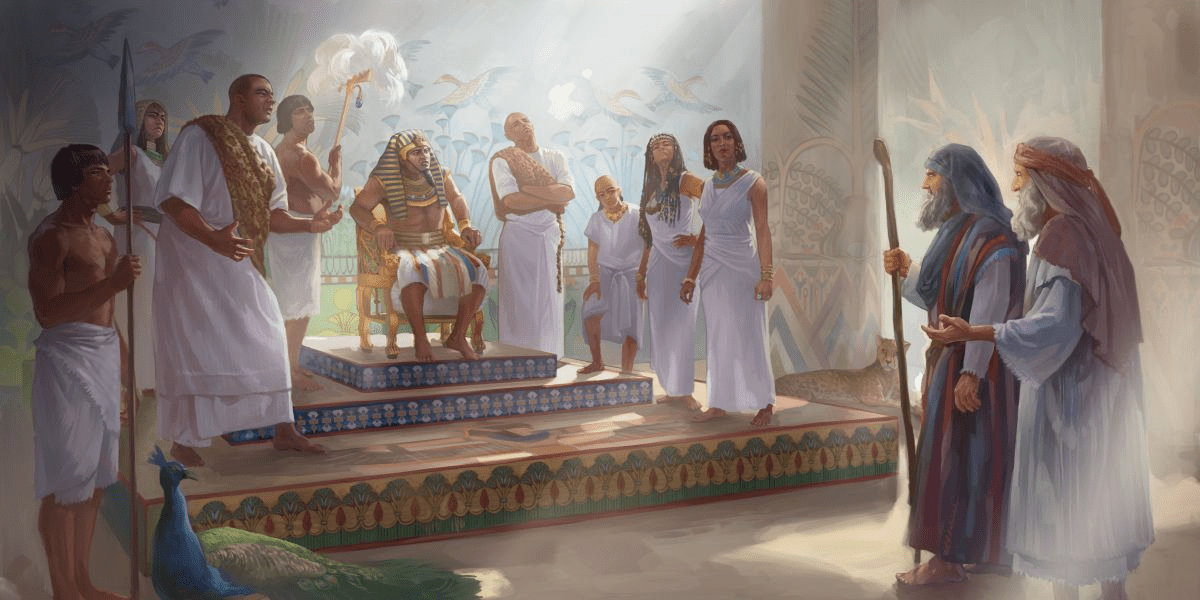
God raised Moses up to upset the status quo in Egypt by standing up to the evil leader of Egypt, Pharoah, who was oppressing and abusing God’s people, the nation of Israel. 

Exo 3:7  And the LORD said, I have surely seen the affliction of my people which are in Egypt, and have heard their cry by reason of their taskmasters; for I know their sorrows; 

Exo 3:9 – 10  Now therefore, behold, the cry of the children of Israel is come unto me: and I have also seen the oppression wherewith the Egyptians oppress them. (10)  Come now therefore, AND I WILL SEND THEE unto Pharaoh, that THOU mayest bring forth my people the children of Israel out of Egypt.

God raised up Moses to deliver Israel from the oppressive ruler of Egypt, Pharoah.  And because Moses, though reluctant at first, answered God’s calling, he along with his older brother Aaron, did eventually deliver Israel from Egypt. 

But how did Moses do this?  Did he just PRAY that Pharoah would one day change and not be oppressive to God’s people?  NO!!  He had to TAKE ACTION!! What action did Moses take?  The action that GOD told him to take: 1) SPEAK to Pharoah and demand that he let God’s people go! 2) bring plagues upon the land of Egypt if Pharoah refuses to listen!

Exo 5:1  And afterward Moses and Aaron went in, and told Pharaoh, Thus saith the LORD God of Israel, Let my people go, that they may hold a feast unto me in the wilderness. 

Exo 9:1  Then the LORD said unto Moses, Go in unto Pharaoh, and tell him, Thus saith the LORD God of the Hebrews, Let my people go, that they may serve me. 

Exodus 7:14; 19  And the LORD said unto Moses, Pharaoh’s heart is hardened, he refuseth to let the people go. (19)  And the LORD spake unto Moses, Say unto Aaron, Take thy rod, and stretch out thine hand upon the waters of Egypt, upon their streams, upon their rivers, and upon their ponds, and upon all their pools of water, that they may become blood; and that there may be blood throughout all the land of Egypt, both in vessels of wood, and in vessels of stone.

God sent Moses on a mission and that mission was to set the nation of Israel free from bondage in Egypt, which he eventually did with his older brother Aaron at his side. 

But what would have happened to God’s people if Moses would have taken a more PASSIVE approach and just PRAYED for God’s people to be set free?  What if Moses refused to actually stand up to Pharoah and refused to speak up for the people of God? 

Then God’s people would have still been abused, mistreated, and oppressed by Pharoah and they would still be crying out to God to deliver them! God would have had to raise up someone else to deliver His people out of Egypt!  Thank God Moses did what God wanted him to do!

David (1st Samuel 17)

David was an upsetter of the status quo!  He was just a young shepherd boy when the nation of Israel was at war with the Philistines.  However, Israel’s army was afraid of the Philistines and they were especially afraid of Goliath, the champion of the Philistines!  He was threatening the armies of Israel and continued to taunt them day in and day out for forty days! 

1 Samuel 17:10-11  And the Philistine said, I defy the armies of Israel this day; give me a man, that we may fight together.  (11)  When Saul and all Israel heard those words of the Philistine, they were dismayed, and greatly afraid.

David came to the trenches near the battlefield to visit his brothers and bring them food.  Apparently, David’s older brother Eliab must have felt embarrassed and convicted about being too afraid to take on Goliath so he decided to accuse David of having ulterior motives for coming to visit them.

1 Samuel 17:28  And Eliab his eldest brother heard when he spake unto the men; and Eliab’s anger was kindled against David, and he said, Why camest thou down hither? and with whom hast thou left those few sheep in the wilderness? I know thy pride, and the naughtiness of thine heart; for thou art come down that thou mightest see the battle. 

But David’s response to his proud, arrogant, fault-finding brother was: 1 Samuel 17:29  And David said, What have I now done? Is there not a cause? 

While King Saul and the armies of Israel were busy hiding from the giant and cowering in fear, David upset the status quo of fear and intimidation by taking action!  He decided to face the giant!!!

1Samuel 17:40  And he took his staff in his hand, and chose him five smooth stones out of the brook, and put them in a shepherd’s bag which he had, even in a scrip; and his sling was in his hand: and HE DREW NEAR TO THE PHILISTINE. 

1Samuel 17:45  Then said David to the Philistine, Thou comest to me with a sword, and with a spear, and with a shield: but I come to thee in the name of the LORD of hosts, the God of the armies of Israel, whom thou hast defied. 

1Samuel 17:49  And David put his hand in his bag, and took thence a stone, and slang it, and smote the Philistine in his forehead, that the stone sunk into his forehead; and he fell upon his face to the earth. 

1Samuel 17:51  Therefore David ran, and stood upon the Philistine, and took his sword, and drew it out of the sheath thereof, and slew him, and cut off his head therewith. And when the Philistines saw their champion was dead, they fled.

Thankfully, David was willing to upset the status quo and stand up to Goliath when no one else was!  Because of his bravery and courage, the Philistines ran from Israel and Israel defeated them!

John the Baptist (Matthew Ch. 3)

*He had a unique ministry that definitely upset the status quo!!  Before John the Baptist came on the scene, it had been about 400 years since any prophet preached in Israel (or Judah?).  So his “voice crying in the wilderness” was the first prophetic message Israel had heard in centuries, which upset the “silent” status quo of that time period. 

His unique message also upset the status quo in that he actually told the people to repent because the Kingdom of Heaven was at hand!!  His message was not, “The Messiah will come”, like they were used to hearing, but, instead, his message was, “The Messiah HAS come!! He is here and you need to prepare your hearts for Him!”

Matthew 3:1-2  In those days came John the Baptist, preaching in the wilderness of Judaea,  (2)  And saying, Repent ye: for the kingdom of heaven is at hand.

John the Baptist was not only upsetting the status quo with his message of repentance and preparing to receive the Messiah, but he also upset the status quo by actually baptizing people in the Jordan River!  That had never been seen before.  The people were actually confessing their sins and being baptized to prepare to meet and accept Jesus, the Messiah!  This was not the way they were used to doing things. 

They were used to bringing an animal sacrifice to cover their sins and make them acceptable to God but they knew their sins could not actually be washed away with the blood of the animals.  So John the Baptist’s message of repentance was different.  It was a new message they weren’t used to hearing. The Jews were used to hearing the Law of Moses being read in the Synagogue but John the Baptist’s message was new and different because he was saying their Savior was here! 

John 1:29  The next day John seeth Jesus coming unto him, and saith, Behold the Lamb of God, which taketh away the sin of the world. 

What an AWESOME message!  Wait, you mean there is a Lamb sacrifice in human form that will take away EVERYONE’s sins??  The One they had been waiting for, the Messiah, had finally come to take away the sin of the world!! No prophet before him had ever been able to declare this message!

Many Jews of that time wanted to fit into the synagogue culture and be socially accepted.  That meant NOT going against the status quo according to the demands and requirements of the Pharisees, Saducees, Chief Priests, and Scribes. It was definitely a “go along to get along” environment.

But John the Baptist was definitely not a “go along to get along” kind of preacher.  In fact, when many of the Jewish leaders came to see John baptizing people at the Jordan River, he called them vipers!

Matthew 3:7 – 8  But when he saw many of the Pharisees and Sadducees come to his baptism, he said unto them, O generation of vipers, who hath warned you to flee from the wrath to come? (8)  Bring forth therefore fruits meet for repentance: Matthew 3:10  And now also the axe is laid unto the root of the trees: therefore every tree which bringeth not forth good fruit is hewn down, and cast into the fire. 

His message was very bold and fiery but he had a calling: he was the “voice of one crying in the wilderness” of whom Isaiah prophesied.  Many times, being the voice of one crying in the wilderness means going against the status quo.  It means having to say what others are too afraid to say but they know it needs to be said.  And sometimes, when someone does decide to go against the status quo and speak out about what is wrong, then they pay the price.      

John the Baptist was not only willing to preach repentance to the Jews because the Messiah had come, but he also called out King Herod directly for committing adultery with his brother Philip’s wife, Herodias.

Mark 6:18  For John had said unto Herod, It is not lawful for thee to have thy brother’s wife. Because of this, John the Baptist was thrown in prison and eventually beheaded.

In Part 2, we’ll look at others in the Bible who upset the status quo of their day and how God blessed them when they made a stand for Him!
Scriptural Promise for the Week of December 29 – January 4

One of the earliest promises of God was that there would be someone who would come to undo what satan had just done.

When satan was able to talk Adam and Eve into disobedience to God, the plan of God was activated to send mankind a Redeemer.

This Redeemer would come to destroy the works of the devil and open the door of salvation to all who would accept it!

That promise is still being fulfilled today; not only to save those who come to God by faith in Jesus, but to continue to bruise the serpent’s head by giving us daily victory over sin!

As you go throughout this week, remember to speak the name of Jesus over your situation and watch satan’s head get bruised each and every time!

Bible Reading: 1 Corinthians 10:1-4  Moreover, brethren, I would not that ye should be ignorant, how that all our fathers were under the cloud, and all passed through the sea;  (2)  And were all baptized unto Moses in the cloud and in the sea;  (3)  And did all eat the same spiritual meat;  (4)  And did all drink the same spiritual drink: for they drank of that spiritual Rock that followed them: and that Rock was Christ.

Text: 1 Corinthians 10:4  And did all drink the same spiritual drink: for they drank of that spiritual Rock that followed them: and that Rock was Christ.

Introduction:

In this area of scripture, Paul is referring to a time in the Old Testament when the nation of Israel was walking through the wilderness. He says they were “under the cloud” speaking of the manifestation of God’s presence in the form of a cloud that covered them by day.

He says they “all passed through the sea” speaking of crossing the Red Sea. They “did all eat of the same spiritual meat”, not only the manna God provided from Heaven, but the word of God that was preached unto them.

He says they “were all baptized unto Moses in the cloud and in the sea”. The word baptism means to fully submerge and surround, so the nation of Israel was surrounded by water when they crossed the Red Sea and they were surrounded by the cloud that covered them by day while they walked through the wilderness. God considered these as a form of baptism which represents salvation. As long as they crossed the Red Sea and stayed under the cloud in the wilderness, and under the ministry of Moses or “unto Moses”, they were right where God wanted them to be.

He then brings up the spiritual drink and the spiritual Rock, which was Christ. In the wilderness, it was a physical rock that was used to bring forth water, but it was the Rock Christ Jesus who brought forth water from it, even though it was in the Old Testament.

1) A Physical Rock Giving Physical Water

    a) Numbers 20:7-11  And the LORD spake unto Moses, saying,  (8)  Take the rod, and gather thou the assembly together, thou, and Aaron thy brother, and speak ye unto the rock before their eyes; and it shall give forth his water, and thou shalt bring forth to them water out of the rock: so thou shalt give the congregation and their beasts drink.  (9)  And Moses took the rod from before the LORD, as he commanded him.  (10)  And Moses and Aaron gathered the congregation together before the rock, and he said unto them, Hear now, ye rebels; must we fetch you water out of this rock?  (11)  And Moses lifted up his hand, and with his rod he smote the rock twice: and the water came out abundantly, and the congregation drank, and their beasts also.

Moses was told to speak once, but he smote twice. He also took the glory that belonged to God by saying “must we fetch you water out of this rock?” The people did not appear to know that the LORD had spoken these things to Moses, so Moses made it appear as though it were his idea and by his power that he did this!

    b) This would be a determining factor as to why Moses could not lead God’s people into the Promise Land. Numbers 20:12  And the LORD spake unto Moses and Aaron, Because ye believed me not, to sanctify me in the eyes of the children of Israel, therefore ye shall not bring this congregation into the land which I have given them.

Anytime we do things outside the will of God to accomplish a goal, we show that we do not truly believe God.

   c) In his song, Moses says in Deuteronomy 32:15  But Jeshurun (a name given to Israel to signify their call to be righteous – Used only four times) …lightly esteemed (or fell away from) the Rock of his salvation.

So, we see that God has always wanted to be the Rock of His people’s salvation, and He used a physical rock both to give physical water and also to represent Jesus Christ who gives living water!

2) A Spiritual Rock Giving Spiritual Water

    a) John 4:10  Jesus answered and said unto her, If thou knewest the gift of God, and who it is that saith to thee, Give me to drink; thou wouldest have asked of him, and he would have given thee living water.

    b) God’s promise

John 4:13-14  Jesus answered and said unto her, Whosoever drinketh of this water shall thirst again:  (14)  But whosoever drinketh of the water that I shall give him shall never thirst; but the water that I shall give him shall be in him a well of water springing up into everlasting life.

     c) Someone who had the right response

John 4:15  The woman saith unto him, Sir, give me this water, that I thirst not, neither come hither to draw.

3) Christ is Still the Rock of Our Salvation

    a) Psalms 62:6  He only is my rock and my salvation: he is my defence; I shall not be moved.

    b) 1 Corinthians 10:4  And did all drink the same spiritual drink: for they drank of that spiritual Rock that followed them: and that Rock was Christ.

    c) Luke 20:17-18  And he beheld them, and said, What is this then that is written, The stone which the builders rejected (speaking of Jesus as the Messiah and Christ), the same is become the head of the corner?  (18)  Whosoever shall fall upon that stone (speaking of salvation through faith) shall be broken (meaning their self-will shall be broken); but on whomsoever it shall fall (speaking of the day of judgment), it will grind him to powder (speaking of eternal judgment for the sins they would not allow Christ to wash).

Conclusion:

When we fall by faith onto the Rock Christ Jesus, and trust in Him to be the Rock of our salvation, He will uphold us and give us this water than we thirst no more for the things of the world, but we start to hunger and thirst for His righteousness!

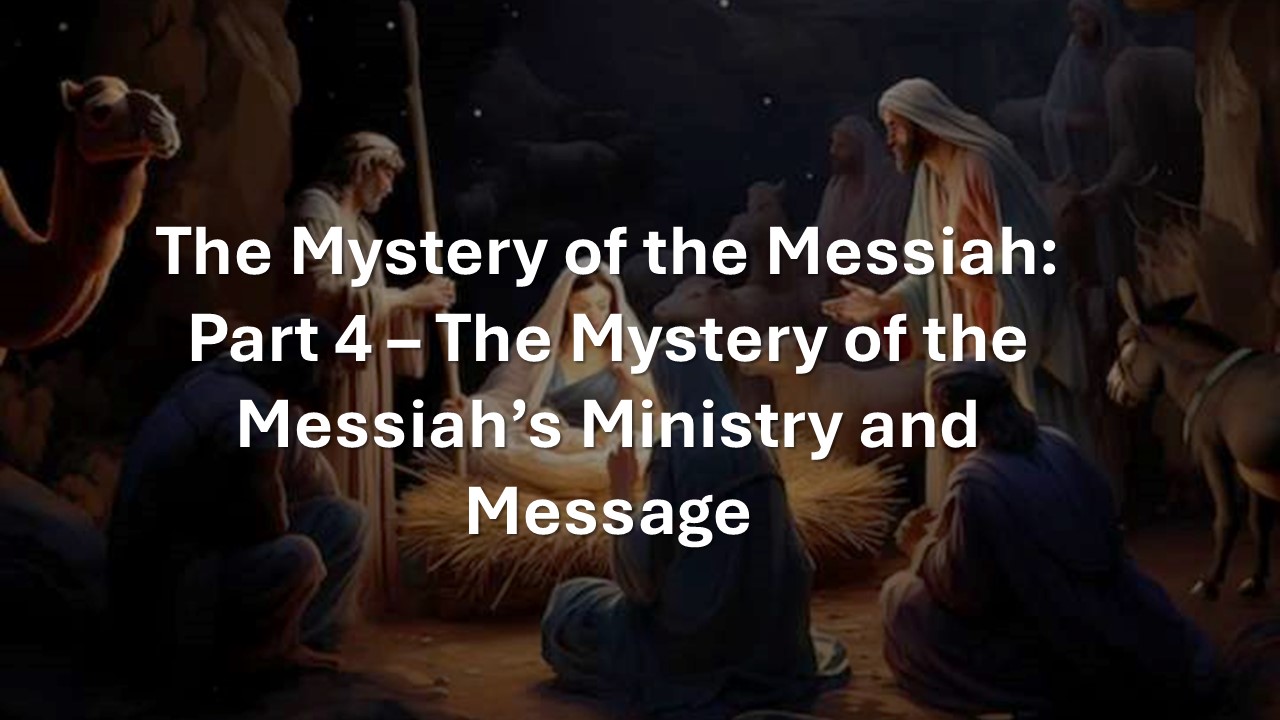
The Mystery of the Messiah: Part 4 – The Mystery of the Messiah’s Ministry and Message

To watch the recorded video of this teaching, please >>Click Here<<

Bible Reading: 1st Peter 1:10-12  Of which salvation the prophets have enquired and searched diligently, who prophesied of the grace that should come unto you:  (11)  Searching what, or what manner of time the Spirit of Christ which was in them did signify, when it testified beforehand the sufferings of Christ, and the glory that should follow.  (12)  Unto whom it was revealed, that not unto themselves, but unto us they did minister the things, which are now reported unto you by them that have preached the gospel unto you with the Holy Ghost sent down from heaven; which things the angels desire to look into.

Mark 1:14-15  Now after that John was put in prison, Jesus came into Galilee, preaching the gospel of the kingdom of God,  (15)  And saying, The time is fulfilled, and the kingdom of God is at hand: repent ye, and believe the gospel.

The Mystery of the Messiah’s Ministry

In this fourth and final part of the series The Mystery of the Messiah, we’ll see that the ministry of the Messiah was one that was and still is highly misunderstood.

This is especially the case to those in the days of Jesus who thought the Messiah would come to deliver them from the tyranny of the Roman government. This is part of the reason Jesus was so rejected. He came preaching about personal responsibility and repentance, not overthrowing the government like so many Jews hoped!

An overthrow of the government may have sounded appealing to the Jews, but what they needed was repentance from dead works. Jesus focuses on giving you what you need. This is something that, though it be less appealing to the flesh, will get you into eternity with God!

To illustrate this misperception, we’ll look at the life of someone who arguably would have been the most familiar with the ministry of the Messiah…John the Baptist.

It seems that even John the Baptist had a certain perception of what the ministry of the Messiah would look like. John the Baptist was the fulfillment of the prophecies found in Isaiah and Malachi.

Isaiah 40:3 The voice of him that crieth in the wilderness, Prepare ye the way of the LORD, make straight in the desert a highway for our God. Jesus confirms this in Luke 7:27  This is he, of whom it is written, Behold, I send my messenger before thy face, which shall prepare thy way before thee.

Malachi 4:5-6 Behold, I will send you Elijah the prophet before the coming of the great and dreadful day of the LORD:  (6)  And he shall turn the heart of the fathers to the children, and the heart of the children to their fathers, lest I come and smite the earth with a curse. Jesus confirms this in Matthew 11:14  And if ye will receive it, this is Elias, which was for to come.

We get the impression that John the Baptist had certain expectations of the Messiah’s ministry through the kind of messages John preached. What was John’s message?

Luke 3:3 And he came into all the country about Jordan, preaching the baptism of repentance for the remission of sins. Luke 3:7-8 …O generation of vipers, who hath warned you to flee from the wrath to come?  (8)  Bring forth therefore fruits worthy of repentance…

Also, Matthew 3:10 And now also the axe is laid unto the root of the trees: therefore every tree which bringeth not forth good fruit is hewn down, and cast into the fire.

Instead of looking for the Messiah to deliver Israel from Roman authority, it seems John the Baptist’s expectation was that the Messiah would show up and judge all the hypocrites.

Basically, John the Baptist’s message was, “Turn or burn sinners, because the Messiah is here and He is not messing around!!”…or something like that!

The Mystery of the Messiah’s Message

We read of one of the first messages preached by Jesus, known as “The Beatitudes”, or supreme blessings, is found in Matthew 5:3-4  Blessed are the poor in spirit: for theirs is the kingdom of heaven.  (4)  Blessed are they that mourn: for they shall be comforted.

This was hardly the message the Messiah was expected to preach! A lot of people today also have a lot of expectations of Jesus that He does not fulfill and because of this, they get offended.

It was John the Baptist who identified Jesus as the Lamb of God, John 1:29  …Behold the Lamb of God, which taketh away the sin of the world. John would also say, John 3:30  He must increase, but I must decrease. Yet, we find that even he had certain preconceived ideas about the Messiah.

Not much longer after this, John would be thrown into prison at The Fortress of Machaerus, which is located on the northeastern shore of the Dead Sea, at the mouth of the Jordan River.

He was put there by Herod Antipas, not simply because he preached about repentance in vague generalities, but because he specifically identified what should be repented of…namely Herod’s adulterous relationship with his brother Philip’s wife.

Because the ministry of Jesus wasn’t one of judgment and eternal punishment, as John supposed it would be, even John the Baptist seems to have doubted the ministry of Jesus as being the Messiah. This is where we find John asking the question in Luke 7:19  …Art thou he that should come? or look we for another?

It was to this question that Jesus responds in Luke 7:21-23  And in that same hour he cured many of their infirmities and plagues, and of evil spirits; and unto many that were blind he gave sight.  (22)  Then Jesus answering said unto them, Go your way, and tell John what things ye have seen and heard; how that the blind see, the lame walk, the lepers are cleansed, the deaf hear, the dead are raised, to the poor the gospel is preached.  (23)  And blessed is he, whosoever shall not be offended in me.

This was a fulfillment of the prophecy of Isaiah 61:1-2  The Spirit of the Lord GOD is upon me; because the LORD hath anointed me to preach good tidings unto the meek; he hath sent me to bind up the brokenhearted, to proclaim liberty to the captives, and the opening of the prison to them that are bound;  (2)  To proclaim the acceptable year of the LORD…

John the Baptist was looking for Part 2 of this prophecy in Isaiah 61, which reads in Verse 2 and the day of vengeance of our God; to comfort all that mourn. Jesus’ response to John was basically, “Remember John, there is another part of the prophecies that must be fulfilled first. We must fulfill the first part before we can fulfill the second part.”

Maybe upon hearing this response, John the Baptist realized that he too had the wrong perspective of what the message of the Messiah would be and thus became more willing to accept the will of God.

So, we see that the ministry and message of Jesus did not fit the preconceived ideas of what was expected of the Messiah, even to John the Baptist, who was most familiar and ready for it.

Many today will not accept Christ, because His ministry and message do not fit into their preconceived ideas, much like those in the days of Jesus. But, His ministry is God’s chosen way and anyone who accepts this chosen way will get to God’s Heaven through the ministry and message of Jesus Christ, the Messiah and Christ of God!

This site is dedicated to Encouraging Men and Women to Walk in a Personal Relationship with God. If this article has added value to your life for God, consider subscribing by >>Clicking Here << and joining our YouTube family by >> Subscribing Here <<.

Thank you!

Pastor Fulmer

Scriptural Promise for the Week of December 22 – 28

Isaiah 9:6-7  For unto us a child is born, unto us a son is given: and the government shall be upon his shoulder: and his name shall be called Wonderful, Counsellor, The mighty God, The everlasting Father, The Prince of Peace.  (7)  Of the increase of his government and peace there shall be no end, upon the throne of David, and upon his kingdom, to order it, and to establish it with judgment and with justice from henceforth even for ever. The zeal of the LORD of hosts will perform this.

These well-known verses are not only a prophecy, but they are also a promise…a promise that there would be given to the human race a gift, in the form of a child.

This gift would be Jesus Christ, the only Person who could bring complete peace upon the entire world. Jesus is God’s perfect gift to us!

Until He returns to bring complete peace upon the entire world, He wants to bring complete peace into our personal worlds!

When we receive this promise from Isaiah in our personal lives, God will fulfill His promise of complete peace to us!