Scriptural Promise for the Week of March 9 – 15, 2025

God’s Promise of Reward for Spiritual Endurance

This verse reiterates God’s promise of rewards for steadfast faith and perseverance through life’s trials.

Temptation is a universal experience, a test of faith and virtue that every individual encounters. In James 1:12, to endure temptation means to withstand challenges, resist the allure of sin, and maintain integrity. This endurance is not merely about surviving trials, but it is about emerging stronger because of them!

The promise of the crown of life is the ultimate prize and is to all those who stay faithful to God, trusting that His plan is working together for our good!

Scriptural Promise for the Week of March 2 – 8, 2025

God’s Promise to Remember Our Labor of Love

The word of God reminds us that we have a promise from God Himself that He will not forget all that we have done in His name!

In a world where appreciation is fleeting, when we do what we do as a representative of God, we can be assured  that we have a reward from God directly!

This promise should encourage God’s people to continue their labor of love, even if other people do not see it, because there is a God in Heaven who does, and He appreciates it greatly!

Scriptural Promise for the Week of February 23 – March 1, 2025

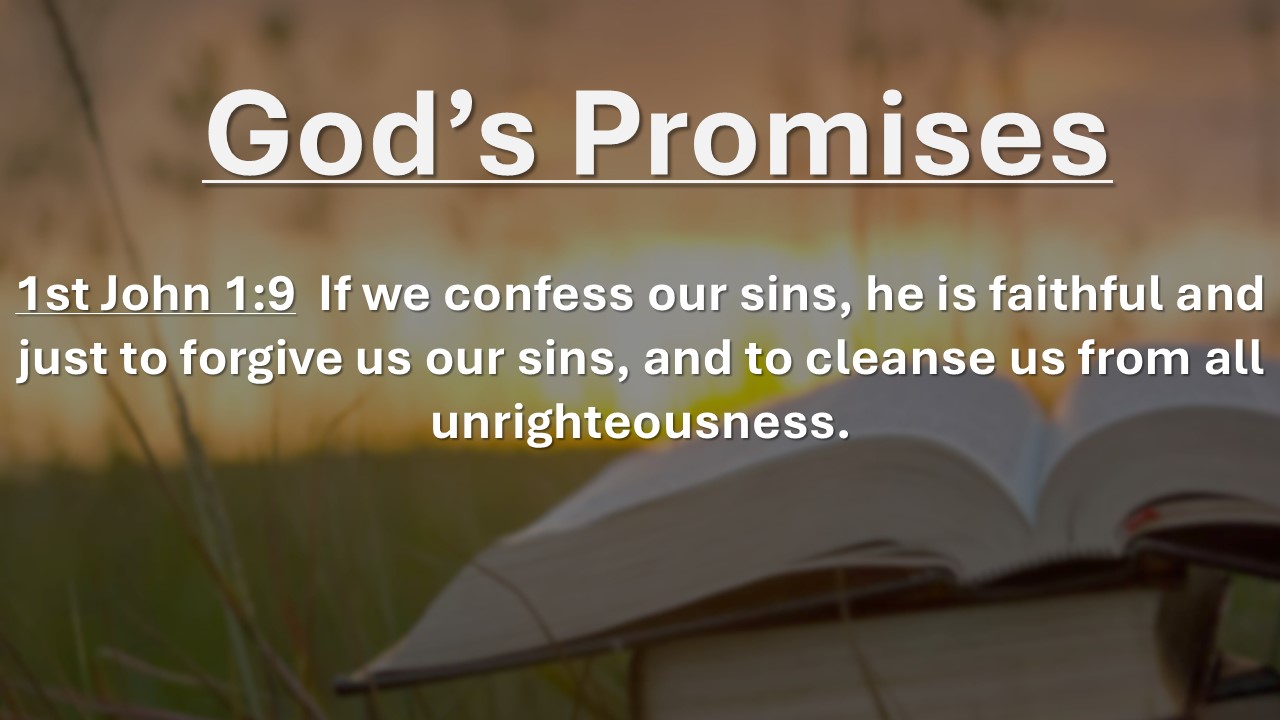
God’s Promise of Forgiveness and Purification

1st John 1:9  If we confess our sins, he is faithful and just to forgive us our sins, and to cleanse us from all unrighteousness.

In this sacred verse we find a profound and comforting promise! This verse encapsulates an essential component of the Christian faith—the transformative power of confession and the boundless mercy of divine forgiveness.

Confession is an act of humility and self-awareness. It requires us to look inward and to offer up our sins in truth and repentance. We are promised by God that when we view this process, not just as a formality, but as a deeply personal journey toward spiritual restoration and renewal, we can release the burden of guilt and open our hearts to the grace of complete forgiveness!

Salt and Light in the World

If you would like to watch the recording of this message, you can do so by >> Clicking Here <<.

The Metaphor of Salt

Salt, in ancient times, was a valuable commodity. It was used not only for seasoning but also for preserving food. In the context of Matthew 5:13, Jesus refers to His followers as “the salt of the earth,” implying that they are essential to the moral and spiritual preservation of society.

Yet, He also warns that if salt loses its savor, it becomes useless. This metaphor carries a deep spiritual implication: Christians must maintain their integrity and influence. If they fail to do so, they risk becoming ineffective in their mission, akin to salt that has lost its taste.

The Role of Salt in Ancient Culture

Salt’s importance in ancient culture cannot be overstated. It was often used in covenants, symbolizing loyalty and durability. Jesus’ reference to salt underscores the perpetual and binding nature of a believer’s commitment to live righteously and influence the world positively.

Losing Savor: A Spiritual Decline

The notion of salt losing its savor is a metaphor for spiritual decline. When believers fail to live according to the principles of their faith, they lose their distinctiveness. This loss of “flavor” signifies a broader failure to impact the world positively and to uphold the teachings of Jesus.

The Metaphor of Light

In verse 14, Jesus calls His followers “the light of the world.” This metaphor emphasizes visibility, guidance, and the dispelling of darkness. Light is essential for navigation and clarity, symbolizing the enlightening impact of Christian witness in a world often characterized by moral and spiritual obscurity.

A City on a Hill

Jesus further illustrates this point by comparing believers to “a city that is set on a hill.” Such a city is conspicuous, visible from afar, and cannot be hidden. This analogy underscores the public and prominent role that Christians are to play in society. Their actions, values, and beliefs should shine brightly, guiding others towards truth and righteousness.

The Responsibility of Light-Bearers

As bearers of light, Christians have a responsibility to illuminate the path for others. This means living in a way that reflects the teachings of Christ, thus providing moral and spiritual guidance. Their influence should extend beyond personal piety to affect the broader community positively.

Conclusion

Matthew 5:13-14 encapsulates the dual role of believers as both preservative (salt) and illuminative (light) forces in the world. These metaphors call Christians to maintain their distinctiveness and to actively engage in transforming society through their example.

In essence, these verses challenge believers to uphold their faith’s principles, ensuring that their presence in the world is both impactful and enduring. By embodying the qualities of salt and light, Christians fulfill their divine mandate to influence the world positively, guiding it towards moral and spiritual integrity.

This site is dedicated to Encouraging Men and Women to Walk in a Personal Relationship with God. If this article has added value to your life for God, consider subscribing by >>Clicking Here << and joining our YouTube family by >> Subscribing Here <<.

Thank you!

Pastor Fulmer

Scriptural Promise for the Week of February 16 – 22, 2025

God’s Promise of Comfort, Hope, and Spiritual Establishment

We have preserved for us a promise from God that Jesus and the Father offer us more than eternal life. For those who are born again, we have the promise from God of everlasting comfort and hope!

This comfort and hope are meant, not only to keep us from the evil influences of worry and fear, but they are meant to help us be more established in our words and work for God by enjoining to us a stronger sense of faith!

Remember, when you are challenged to give in to worry and fear, there is a God who still establishes faith in the hearts of His people by providing them the comfort, hope, and spiritual establishing that they need!

Scriptural Promise for the Week of February 9 – 15, 2025

God’s Promise of the Lord’s Return

In this week’s promise, God ensures to let us know that there is coming a day of full deliverance from the evils of this world!

While some people may depart this life through the natural means of death, there will be many who are caught up to meet the Lord in the air!

Knowing this next prophetic event is imminent and can happen at any moment, we are promised by God Himself that all who stay faithful to God will be part of this great event!

As we go through this week, remember God’s comforting promise to you that He will return and receive you as a reward for your faithfulness to Him!

A Biblical Journey from the First Garden to the Last

Watch the recording of this message by Subscribing Here!

It is notable in the Bible that there were some important events that took place, and some of the most important events took place in a garden. We’ll look at the connections between three gardens throughout the Bible  and how they are part of God’s eternal plan.

The Garden of Eden

Genesis 2:7-9  And the LORD God formed man of the dust of the ground, and breathed into his nostrils the breath of life; and man became a living soul.  (8)  And the LORD God planted a garden eastward in Eden; and there he put the man whom he had formed.  (9)  And out of the ground made the LORD God to grow every tree that is pleasant to the sight, and good for food; the tree of life also in the midst of the garden, and the tree of knowledge of good and evil.

The reason we know that all the evil actions of people are no fault of God is because God created man and woman perfectly with a perfect environment.

Many ask, “Why didn’t God stop it?” He had already tried to, and because He was not willing to be a tyrannical and controlling God, He allowed people to make a choice and thus suffer the consequences.

Genesis 2:16-17  And the LORD God commanded the man, saying, Of every tree of the garden thou mayest freely eat:  (17)  But of the tree of the knowledge of good and evil, thou shalt not eat of it: for in the day that thou eatest thereof thou shalt surely die.

Problems in the Garden of Eden

Genesis 3:1-3  Now the serpent was more subtil than any beast of the field which the LORD God had made. And he said unto the woman, Yea, hath God said, Ye shall not eat of every tree of the garden?  (2)  And the woman said unto the serpent, We may eat of the fruit of the trees of the garden:  (3)  But of the fruit of the tree which is in the midst of the garden, God hath said, Ye shall not eat of it, neither shall ye touch it, lest ye die.

God didn’t say don’t touch it, He said, Genesis 2:17  But of the tree of the knowledge of good and evil, thou shalt not eat of it: for in the day that thou eatest thereof thou shalt surely die. No doubt satan picked up on the fact that Eve did not know the word of God. This is why it’s important to know what God said, and not what we think He said!

Genesis 3:4 – 5 And the serpent said unto the woman, Ye shall not surely die:  (5)  For God doth know that in the day ye eat thereof, then your eyes shall be opened, and ye shall be as gods, knowing good and evil.

“Ye shall not surely die…” This is the first lie recorded in the word of God. The first lie to be believed was the lie believed by Lucifer that he could overthrow God. Jesus tells us how that ended up. Luke 10:18  And he said unto them, I beheld Satan as lightning fall from heaven.

Genesis 3:6 – 7 And when the woman saw that the tree was good for food, and that it was pleasant to the eyes, and a tree to be desired to make one wise, she took of the fruit thereof, and did eat, and gave also unto her husband with her; and he did eat.  (7)  And the eyes of them both were opened, and they knew that they were naked; and they sewed fig leaves together, and made themselves aprons.

John later refers to this mindset in 1st John 2:16  For all that is in the world, the lust of the flesh, and the lust of the eyes, and the pride of life, is not of the Father, but is of the world.

Genesis                                                                                   1st John

“The tree was good for food”                            =        “the lust of the flesh”

“and that it was pleasant to the eyes”              =        “the lust of the eyes”

“and a tree to be desired to make one wise”  =        “the pride of life”

God’s Solution

Genesis 3:23-24  Therefore the LORD God sent him forth from the garden of Eden, to till the ground from whence he was taken.  (24)  So he drove out the man; and he placed at the east of the garden of Eden Cherubims, and a flaming sword which turned every way, to keep the way of the tree of life.

God did not want people to live forever under the penalty of sin so, in His mercy, He drove them away from the tree of life while simultaneously imposing the proper punishments upon the guilty parties.

The Garden of Gethsemane

Matthew 26:36-39  Then cometh Jesus with them unto a place called Gethsemane, and saith unto the disciples, Sit ye here, while I go and pray yonder.  (37)  And he took with him Peter and the two sons of Zebedee, and began to be sorrowful and very heavy.  (38)  Then saith he unto them, My soul is exceeding sorrowful, even unto death: tarry ye here, and watch with me.  (39)  And he went a little further, and fell on his face, and prayed, saying, O my Father, if it be possible, let this cup pass from me: nevertheless not as I will, but as thou wilt.

This is where Jesus made the final decision to go through with the will of God that He may provide a way of salvation from the penalty of sin to whosoever will!

Matthew 27:46  And about the ninth hour Jesus cried with a loud voice, saying, Eli, Eli, lama sabachthani? that is to say, My God, my God, why hast thou forsaken me?

John 19:30  When Jesus therefore had received the vinegar, he said, It is finished: and he bowed his head, and gave up the ghost.

Jesus went through all of this because of what happened in the Garden of Eden. Why did Jesus have to do this? It was to deliver us from the penalty of sin that the rest of the world will face.

Galatians 1:4-5  Who gave himself for our sins, that he might deliver us from this present evil world, according to the will of God and our Father:  (5)  To whom be glory for ever and ever. Amen.

Jesus has a continuing work to do. Ephesians 5:27  That he might present it to himself a glorious church, not having spot, or wrinkle, or any such thing; but that it should be holy and without blemish.

God’s Heavenly Garden

Revelation 2:7  He that hath an ear, let him hear what the Spirit saith unto the churches; To him that overcometh will I give to eat of the tree of life, which is in the midst of the paradise of God.

Revelation 22:1-2  And he shewed me a pure river of water of life, clear as crystal, proceeding out of the throne of God and of the Lamb.  (2)  In the midst of the street of it, and on either side of the river, was there the tree of life, which bare twelve manner of fruits, and yielded her fruit every month: and the leaves of the tree were for the healing of the nations.

The tree of life hasn’t been partaken of by people since it was in the Garden of Eden, and now it will be partaken of for all eternity by those who place their faith, love, and obedience in the finished work of Jesus Christ!

This is why Paul says we are “…partakers of the heavenly calling…” and that we are to “…consider the Apostle and High Priest of our profession, Christ Jesus”! (Hebrews 3:1)

We can be partakers of the tree of life in God’s heavenly garden because Jesus made up His mind in the Garden of Gethsemane to correct the problem that started in the Garden of Eden by dying on the cross for our sins and making a way for us to escape the penalty of sin!

Have you made up your mind to die to sin in your life and make Jesus your savior? Are you letting Him take away the spiritual spots and wrinkles of unholy behaviors and mindsets in your life? This is the only way to receive the reward that is set before us and to be an eternal partaker of the tree of life!

This site is dedicated to Encouraging Men and Women to Walk in a Personal Relationship with God. If this article has added value to your life for God, consider subscribing by >>Clicking Here << and joining our YouTube family by >> Subscribing Here <<.

Thank you!

Pastor Fulmer

Scriptural Promise for the Week of February 2 – 8, 2025

This promise from God reminds us that we already have all we need to live a victorious, virtuous, and Godly life because we know Jesus!

This is because the power to live this life comes directly from God Himself!

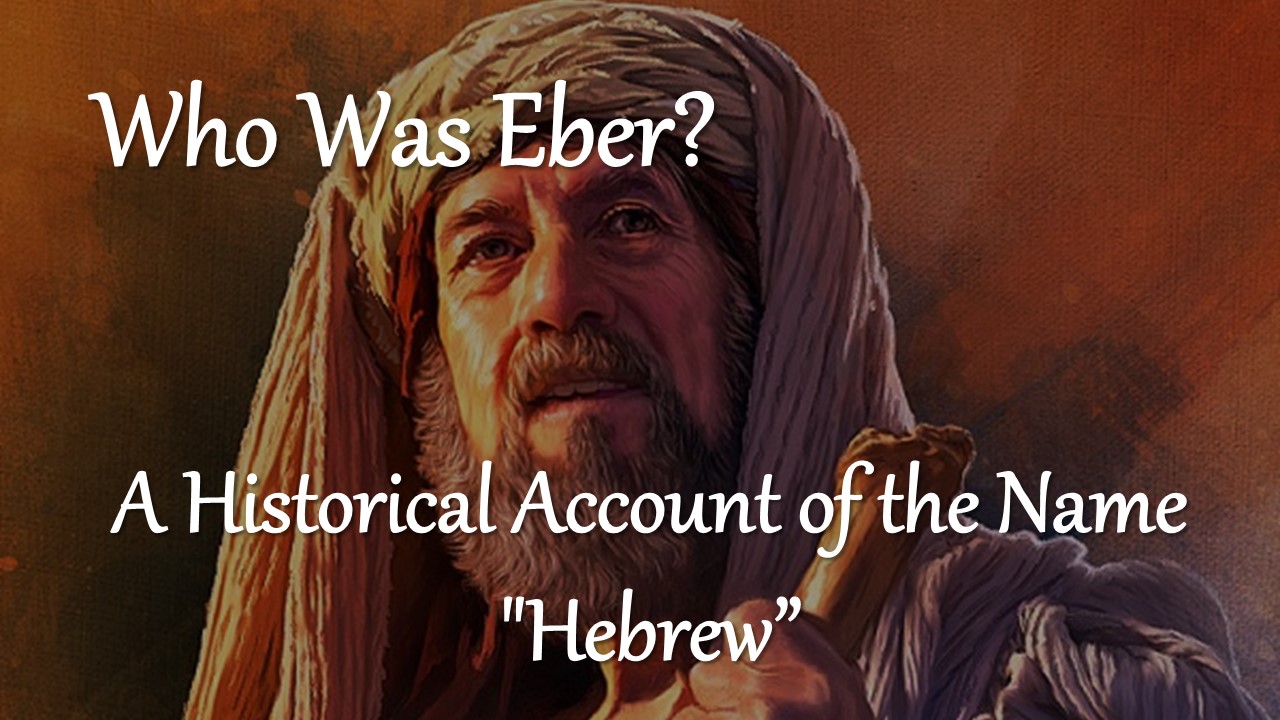
Who Was Eber? A Historical Account of the Name “Hebrew”

Introduction

Eber is a significant figure in the Bible, specifically within the genealogies found in the Book of Genesis. He is an ancestor of the Hebrew people, and his name is believed to be the root of the term “Hebrew.”

As a matter of fact, the first time the word “Hebrew” is used can be found regarding Abram in Genesis 14:13  And there came one that had escaped, and told Abram the Hebrew; for he dwelt in the plain of Mamre the Amorite, brother of Eshcol, and brother of Aner: and these were confederate with Abram.

This article explores the historical account of Eber and the reasons why the Hebrews are named after him.

Genealogy of Eber

Eber, also known as Heber, is mentioned in the genealogies listed in Genesis 10 and Genesis 11. He is the great-grandson of Shem, one of Noah’s three sons. According to Genesis 10:24, Eber is the son of Salah.

The genealogy continues in Genesis 11:14-17  And Salah lived thirty years, and begat Eber:  (15)  And Salah lived after he begat Eber four hundred and three years, and begat sons and daughters.  (16)  And Eber lived four and thirty years, and begat Peleg:  (17)  And Eber lived after he begat Peleg four hundred and thirty years, and begat sons and daughters.

The Lineage of Shem

The lineage of Shem is of great importance because it connects to many key figures in the Bible, including Abraham. Shem’s descendants are often associated with the Semitic people, or called “Semites”. According to Jewish tradition, Shem’s descendants were responsible for spreading monotheism and ethical teachings. Eber stands out as a pivotal link within this lineage.

Eber’s Descendants

Eber had two sons, Peleg and Joktan. Genesis 10:25  And unto Eber were born two sons: the name of one was Peleg; for in his days was the earth divided; and his brother’s name was Joktan.

Peleg’s lineage leads directly to Abraham, making Eber an integral ancestor of the Hebrew nation. The name Peleg means “to divide”. The division mentioned in this verse is often interpreted as the division of languages at the Tower of Babel (Genesis 11:1-9). This is also believed by many to be when God separated the continents one from another, or “Pangea” as it’s called.

The Origin of the Name “Hebrew”

The term “Hebrew” is believed to derive from the name Eber. The Hebrew word “Ivri” is thought to mean “descendant of Eber” or “one who crosses over.” The etymology, or historical origin, of this word is supported by various linguistic and historical records.

Jewish tradition also holds that the name “Ivri” signifies Abraham’s crossing over the Euphrates River into Canaan, symbolizing a journey of faith and obedience to God.

The Significance of “Crossing Over”

The concept of “crossing over” is significant in the context of the Hebrews. Abraham, a descendant of Eber, is often described as a wanderer who crossed over from Mesopotamia to the land of Canaan. This act of migration and crossing geographical boundaries is emblematic of the Hebrew experience:

Genesis 12:4  So Abram departed, as the LORD had spoken unto him; and Lot went with him: and Abram was seventy and five years old when he departed out of Haran.

The Jews would later cross over the Jordan River into the Promise Land, under the leadership of Joshua, the successor to Moses. It’s interesting to note that the name Joshua, or Yeshua in Hebrew, is the same name as Yeshua HaMaschiac, or Jesus Christ.

So, we see that the meaning of Eber’s name, “one who crosses over”, or Hebrew, could have been intended by God to first signify the crossing over of Abram from Mesopotamia into Canaan. It could then have been intended by God to signify Eber’s descendants crossing over the Jordan River into their earthly Promise Land. And it could have been intended by God today to signify those who cross over into God’s eternal Promise Land by placing their faith in Jesus Christ!

Conclusion

Eber’s name and legacy are preserved through his descendants and the continued use of the term “Hebrew.” His position in the genealogies situates him as a foundational figure in the ancestral history of the Israelites. Jewish historical references also emphasize Eber’s role in maintaining the language and traditions of the pre-Babel world; before his descendants were ever called “Hebrew”.

Eber’s role in the Bible is crucial for understanding the origins of the Hebrew people. The narrative of Eber and his descendants offers profound insights into the identity and heritage of the Hebrew people! His genealogical importance and the historical connection between his name and the term “Hebrew” underscore his significance in biblical history!

Scriptural Promise for the Week of January 26 – February 1, 2025

This verse is a promise of profound encouragement and assurance. It encapsulates the essence of God’s unwavering commitment to His people.

It stands as a testament to the divine promise that the good work begun in believers at their salvation will be brought to completion not only in this life, but also in eternity!

So, remember! You’re not just going to Heaven, but you are in the process of having the perfect work and will of God completed in your life!

Be sure to share by copying and pasting the link to your social media page so others can also be encouraged by God’s promises!

Blessings,

Pastor Fulmer